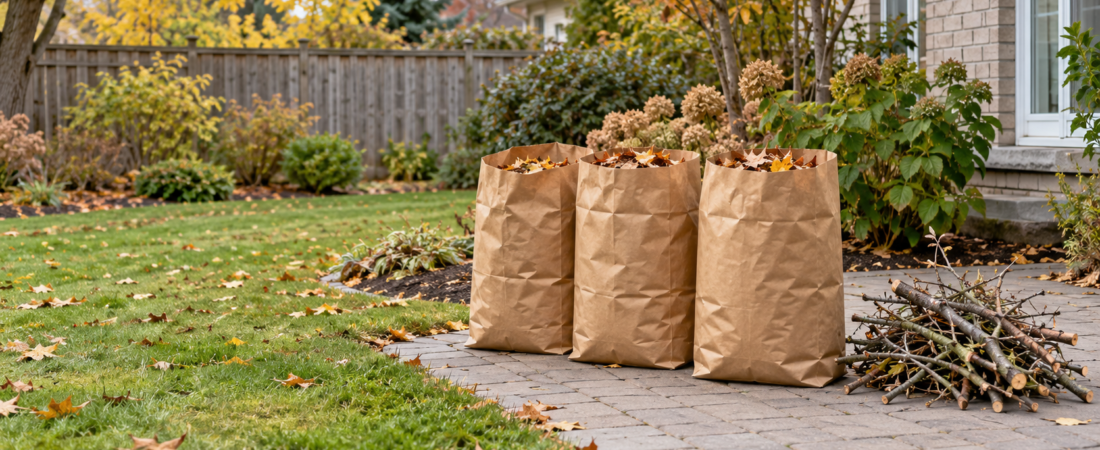
Fall yard waste in London, Ontario is easiest to manage when you identify the material before deciding who will collect it. Separate leaves and plant debris from outdoor furniture, pots, soil and other unwanted items. Then choose between suitable home composting, the City’s current collection or drop-off options, and a private removal quote for the work you need help with.
October cleanups often produce more than a few bags of leaves. Pruned branches, deteriorated planters and a broken patio chair may all be waiting in the same corner. Those objects can need different destinations, even though they came from one yard.
The existing yard waste removal quote page accepts enquiries about outdoor cleanup material. A responding independent provider must confirm what it accepts, whether loading or cleanup is included and when it can attend. London Junk Removal Quotes does not perform the removal itself.
Make a material list before making one large pile
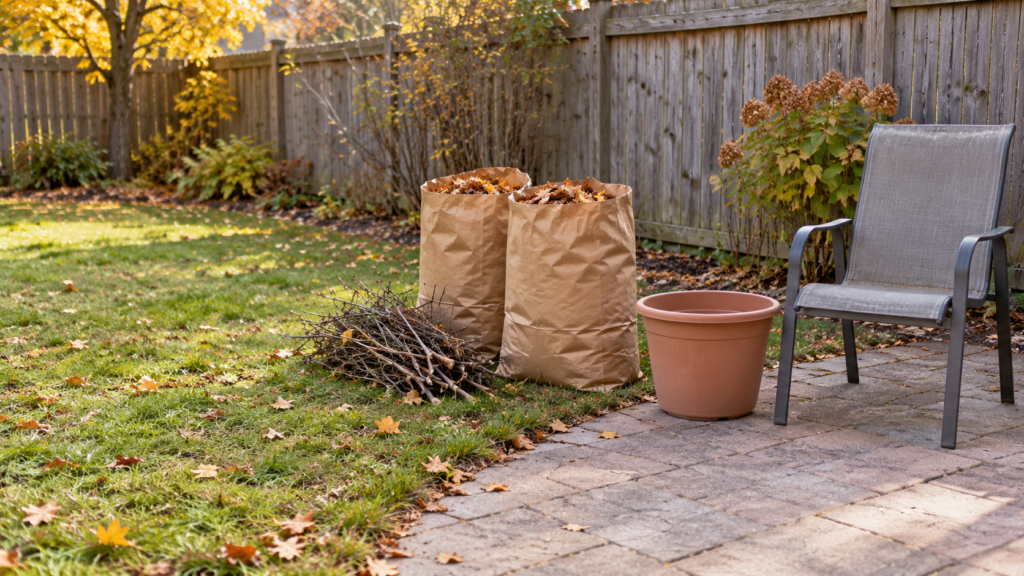
Walk the property and list each group separately. Include what is already gathered and what you still expect to create. “Backyard cleanup” might mean hauling prepared bags, collecting a loose brush pile or doing additional raking; those are different work requests.
Keep the material identifiable. When leaves cover broken pots or pieces of wood, a photograph can make the job look like one compostable pile. The person collecting it may discover a different mixture during loading.
| Group in your yard | What to record | Question for the removal decision |
| Bagged leaves | Bag count, approximate size and whether bags are wet or damaged | Can your chosen route accept the packaging and material? |
| Loose leaves or plant debris | Pile dimensions and whether gathering is still needed | Are you requesting hauling, cleanup labour or both? |
| Branches and brush | Approximate length, thickness and pile size | Are preparation or separate handling required? |
| Planters and outdoor objects | Item count, materials and any remaining contents | Will they be handled separately from plant waste? |
| Soil, rocks or heavy landscaping material | Type, approximate amount and location | Is a specialized or weight-based option needed? |
| Household products or unknown containers | Identifiable product and visible condition | What appropriate separate handling route applies? |
This is an inventory tool, not an acceptance list. Even a private provider that collects yard debris may exclude dense material, restricted products or work involving cutting and dismantling.
Check London’s current yard-waste requirements
The City’s yard waste and composting guidance says to use paper bags, certified compostable bags or reusable containers of 30–125 litres. Ordinary plastic bags are excluded. Branches must be under 10 cm in diameter; tie bundles with twine, up to one metre long, or use suitable containers. Containers and bundles are limited to 20 kg. Soil, sod, rocks and stumps are excluded from this stream, and grass clippings are not collected curbside.
Use your address’s collection calendar for the actual green week and set-out instructions, including statutory-holiday changes. Yard-waste collection can occur once at any point in that scheduled week; a neighbour’s pickup experience does not establish your next date.
Check these instructions again before setting material out. Municipal collection is a specific program with its own preparation rules; a private provider’s packaging requirements may differ.
Choose among four practical routes
Keep suitable organic material on your property
If you already use a suitable composting system or mulch leaves on your lawn, some material may not need transport. The City’s yard-waste guide discusses these options. Consider the actual amount and your available space rather than assuming every cleanup must leave the property.
Do not mix plastic, metal or other unwanted objects into a composting group. If you are unsure whether a plant or material is appropriate for your setup, check specific guidance before adding it.
Use municipal curbside collection when the job fits
This may be practical when your property is eligible, the material meets the program requirements and you can prepare and move it safely. Check the address-specific timing before planning your cleanup around a collection week.
The work on your side matters. You still need a plan for gathering, preparing, storing and setting out the material. If those tasks are the part you cannot manage, waiting for collection does not solve the labour problem.
Use a suitable drop-off location
The City’s EnviroDepot information identifies accepted yard-waste options and current locations and hours. Check your exact material and its preparation before loading a vehicle, especially when the cleanup includes more than leaves or brush.
Think through safe loading and unloading, vehicle capacity and the number of trips. A small pile on the ground can occupy more transport space than expected. Do not plan a trip until you know that both the destination and your transport arrangement fit the load.
Request a private removal quote
Private removal may be useful when you need help with loading, have mixed outdoor objects or need to coordinate a specific property project. Availability, accepted materials and scheduling remain provider decisions.
Ask whether the quote covers prepared piles only or also gathering and other work. A hauling quote does not automatically include leaf raking, garden maintenance, tree cutting or stump removal.
Compare the work involved, not just the pickup label
| Option | Your likely responsibility | Main decision point |
| Compost or mulch at home | Manage suitable material on your own property | Do you have an appropriate system and space? |
| Municipal curbside collection | Meet program rules and prepare and set out material | Does the address, material and calendar fit? |
| Accepted drop-off route | Arrange suitable loading, transport and unloading | Can you safely make the trip with an accepted load? |
| Private removal | Define the requested scope and agree on terms | Does the provider include the labour and material types you need? |
The most useful choice depends on the whole cleanup. A household with prepared leaf bags and easy curb access faces a different project from someone with loose brush behind a locked gate and several broken outdoor objects.
For a much larger project produced over several days, the existing junk removal versus dumpster rental guide explains the broader differences. Confirm material acceptance before choosing a bin; its presence does not make every outdoor material acceptable.
Describe loose piles, bags and access accurately
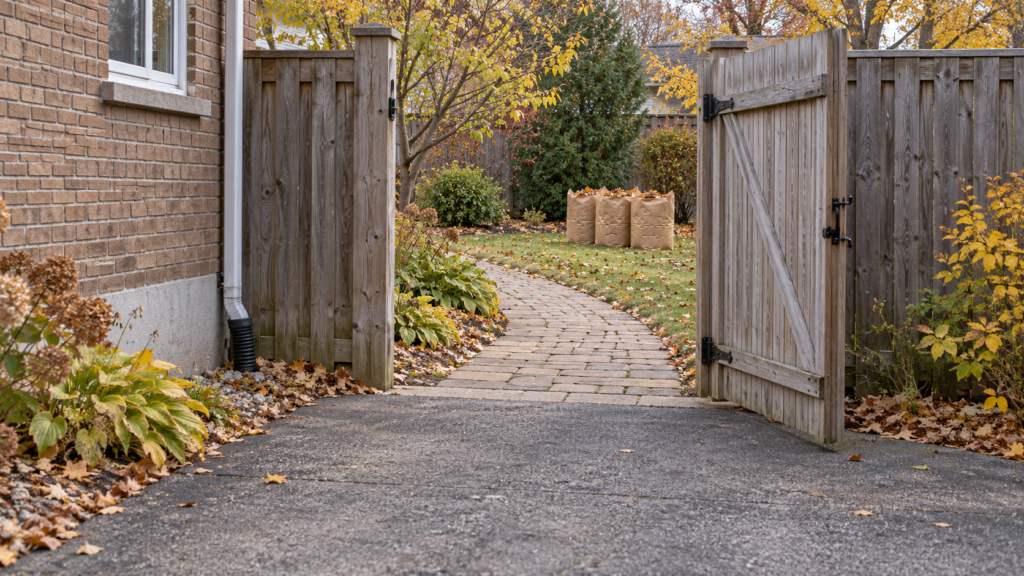
When requesting a quote, provide the material groups, approximate amount and their location. For a pile, useful dimensions are length, width and approximate height. For bags, report the count and condition. Say if the material is wet, compacted or mixed with non-organic objects.
Show the route from the pile to the likely loading point. Include gates, steps, narrow paths and the carrying distance. Explain if the provider will need access through a shared yard or if another person must unlock a gate.
Your description should make the labour request explicit. “Remove eight bags from beside the driveway” and “rake the backyard and remove the leaves” should not be presented as the same job.
Take actual photos of the current material. The site’s quote-photo guide can help you show the whole pile and its depth. Ask the responding provider how it wants to receive photos; avoid sending generated images as evidence of your real cleanup.
A mixed October cleanup example
Suppose you have several bags of leaves, a loose branch pile, two empty planters and a damaged patio chair. Start by recording those as four groups. Check the appropriate route for the organic material and treat the planters and chair as separate unwanted objects.
If you request private help, describe all four groups, the branch dimensions and where they sit. Confirm whether preparing the brush is your responsibility and whether the provider accepts the outdoor objects in the same visit.
This hypothetical example does not establish eligibility, price or a provider’s acceptance. It shows why a detailed list is more helpful than a request to “take everything from the yard.”
Keep Halloween material separate from decorations
For pumpkins, London’s current guidance says to remove candles and plastic or metal decorations before using the appropriate organic-waste route. Painted pumpkins should go in garbage rather than the Green Bin. Check the current page for the preparation and collection choice that applies to your pumpkin.
Treat strings of lights, plastic decorations, damaged props and packaging as their own items. A seasonal decoration is not yard waste simply because it spent October outdoors. Describe these objects separately if they are included in a private removal request.
Avoid common fall-cleanup setbacks
The main errors are preventable: mixing all material before checking destinations, using unsuitable packaging, assuming collection happens on a particular day and leaving the loading work unspecified.
Other problems come from relying on labels. “Natural material” can include dense soil or large wood that does not fit the collection route you selected. “Outdoor junk” may include something a provider does not accept. “Full service” still needs a written scope.
Keep your plans within the property you are authorized to manage. Do not move debris into a park, watercourse or another person’s space to clear your own yard. London’s stormwater guidance explains the harm caused by dumping yard material in natural areas.
Frequently asked questions
Are all outdoor cleanup items considered yard waste?
No. Separate plant material from furniture, pots, packaging and heavy landscaping material. Each group needs an appropriate acceptance and disposal decision.
Can I use ordinary plastic bags for City yard-waste collection?
No. Use packaging permitted in the City’s current requirements, summarized above, and recheck the official instructions before set-out.
Does London collect grass clippings with curbside yard waste?
The current program excludes them. Consult the official yard-waste guidance for the appropriate alternative instead of mixing them into another group.
Where do I find my October yard-waste pickup date?
Use the City’s collection calendar for your address and check the green-week instructions. Do not assume that all London properties have the same dates.
Can I take yard material to an EnviroDepot?
Check the current accepted-material list, preparation, location and hours for your exact load. A mixed outdoor cleanup may need more than one destination.
Will a private provider rake leaves before hauling them?
Only if that work is expressly accepted and included in the quote. Explain whether the material is already gathered or you need additional cleanup labour.
Can patio furniture go with my leaves and branches?
List it separately and ask the provider to confirm acceptance. Do not mix furniture into material intended for an organic-waste stream.
What information is useful for a brush-removal quote?
Report approximate pile dimensions, branch size, location and access. Say whether the material is bundled, loose or mixed with other objects.
Can I arrange pickup for a particular day?
You can state your preferred date in a private enquiry. The responding provider must confirm availability; a quote request does not guarantee a booked appointment.
Does London Junk Removal Quotes do the yard cleanup?
It is an independent quote-request website. Any responding provider confirms and performs the work under its own terms.
Request a quote for the outdoor material you need removed
List the material groups, explain the access and say whether you need hauling alone or additional labour. Submit a free, no-obligation removal enquiry and confirm the accepted items, scope, total price and timing directly with the responding provider.