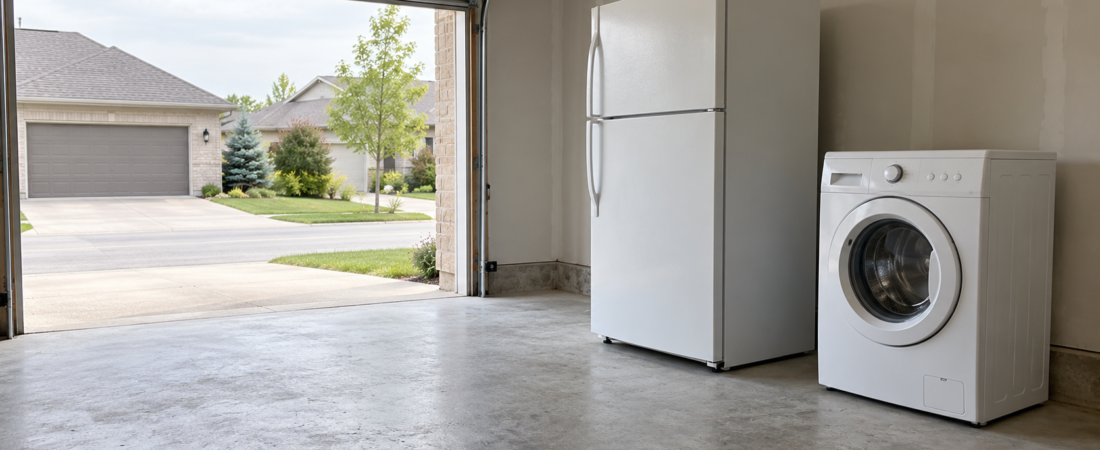
Old appliance disposal in London, Ontario begins with three questions: does the appliance still have a useful next home, will a retailer remove it when delivering a replacement, and can you safely use an accepted drop-off route? If those options do not fit, request a private removal quote that covers the appliance’s actual location, connections and access.
A refrigerator in a basement, a disconnected washer beside a garage entrance and a built-in dishwasher are different removal jobs. The best choice depends on more than whether someone can put an appliance on a truck.
The existing appliance removal quote page explains the information useful for a private enquiry. London Junk Removal Quotes is an independent quote-request website; a responding provider confirms its own acceptance, preparation requirements, price and appointment availability.
Identify the appliance and its current condition
Write down the appliance type, quantity, approximate dimensions and where it is located. State whether it works, is damaged or has not been tested. If you do not know, say so instead of describing it as working to encourage reuse.
Record its connection status separately. “Not in use” does not necessarily mean disconnected. A washer can still be attached to water and a drain, a gas dryer can remain connected to fuel and a dishwasher can still be fixed into cabinetry.
Also identify ownership and permission. Obtain approval before disposing of an appliance that belongs to a landlord, another resident or a business. A removal company cannot resolve ownership questions simply by agreeing to collect an item.
These details let you rule out unsuitable options early. A recipient wanting a working refrigerator needs different information from a provider quoting removal of a damaged freezer down a narrow staircase.
Compare the available routes
| Option | When it may fit | What to confirm |
| Continued use, sale or an agreed handoff | The appliance has a suitable next user | Accurate condition, ownership, collection and installation responsibilities |
| Donation | A recipient accepts that appliance and condition | Current acceptance, appointment and transportation arrangements |
| Retailer haul-away | You are buying a replacement and the retailer offers removal | Included item, fees, location and required preparation |
| Accepted local drop-off | You have suitable help and transport | Item acceptance, handling requirements, destination and current fees |
| Private removal | You need loading help or a project-specific collection | Accepted appliance, indoor access, connections, total scope and price |
No route is automatically available for every appliance. A retailer’s haul-away option can have preparation limits, a donation recipient may decline older models and a provider may not perform disconnection or installation work.
Choose a route based on confirmed arrangements. Avoid booking several uncertain handoffs around a replacement delivery that has a fixed date.
Check retailer haul-away before arranging another pickup
If you are ordering a replacement, ask about the old appliance while confirming delivery. Request the terms for your actual item and location instead of assuming “delivery included” also means disposal included.
Questions worth asking include:
- Is removal of the old appliance included or separately charged?
- Must it be disconnected and emptied before the delivery team arrives?
- Will the team collect it from its current room or only a prepared location?
- Are basement stairs, a second appliance or a built-in unit excluded?
- Who is responsible for qualified disconnection and any installation work?
- What happens if the delivery date changes or the old appliance is not ready?
Keep the written answer with the order details. If the retailer cannot collect the old unit, you can request another option before it blocks the installation area or becomes an unplanned garage-storage problem.
This article does not establish any retailer’s current policy. The point is to check the scope of the offer you are actually purchasing.
Consider reuse only when a recipient has agreed
A functioning appliance may be useful to someone else. Describe its condition honestly, include dimensions and disclose known faults. Confirm whether the recipient can collect it from the actual location.
Donation is also an acceptance decision. Contact the intended recipient before treating a usable appliance as donated. Age, condition, size and current need can all affect whether it is wanted.
If you need a unit removed by a certain date, give the handoff a clear deadline and plan an alternative. An appliance listed online can remain in the same place for weeks if no suitable recipient confirms collection.
Do not promise delivery, disconnection or installation that you cannot provide. Reuse arrangements still need an agreed plan for safely moving the item and preparing it for its next location.
Check municipal options before loading a vehicle
Appliances are excluded from London’s ordinary curbside garbage collection, according to the City’s current garbage guidance. Do not treat a washer or refrigerator as residential bulky furniture simply because it is large.
The City’s EnviroDepot page lists appliance drop-off options. Confirm the destination, exact appliance, hours and current charges before transporting it. Its information about refrigerant-containing appliance fees includes an announced change, so this article does not quote a fixed disposal fee.
Drop-off only solves part of the job. You still need a suitable plan for disconnecting, moving, loading, securing and unloading the appliance. If you do not have appropriate help or transport, request a quote for that work instead of assuming a drop-off option makes it manageable.
Why refrigerators and freezers need a handling check
Refrigerators, freezers and other cooling equipment can contain refrigerant. Keep the cooling system intact and ask the collector or receiving facility how the unit will be handled. Do not cut tubing or attempt to release refrigerant to reduce the appliance’s weight or make it look like ordinary scrap.
Environment and Climate Change Canada’s refrigeration-system code of practice addresses recovery of refrigerant and oil when equipment is decommissioned. For a household enquiry, the practical step is to use a collector and destination equipped to handle the appliance appropriately.
Ask whether any preparation, recovery arrangements or related charges apply. A provider accepting a metal appliance does not establish how cooling equipment is processed afterward.
Keep a stored appliance in a controlled area away from children until collection, and follow the manufacturer’s safe storage and disposal guidance for the model. Ask the collector about any required securing or preparation before the appointment.
Separate disconnection from hauling
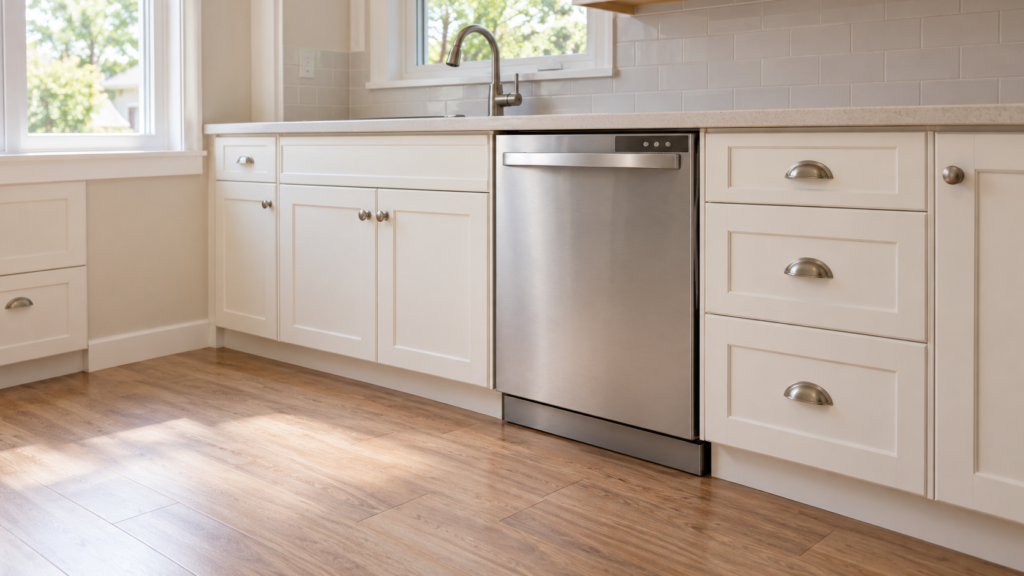
Confirm who prepares the appliance before booking pickup. A haul-away quote may cover carrying and transport while leaving water, gas, electrical or built-in connections outside the scope.
For gas-connected equipment, arrange a properly registered fuels contractor and certified gas technician. TSSA’s consumer reminder about authorized gas-appliance work explains the certification and registration requirement. Do not assume a removal crew has those qualifications.
For hardwired, plumbed or built-in appliances, use appropriate qualified assistance and the manufacturer’s instructions. Explain unfinished preparation in the quote request. Do not try to disconnect something unfamiliar or pull a fixed appliance out of cabinetry to make collection easier.
Empty food, clothing and personal belongings before removal when you can do so safely. Ask about defrosting, drainage or other model-specific preparation rather than applying a generic waiting period to every refrigerator, freezer or washer.
Show the route, not only the appliance
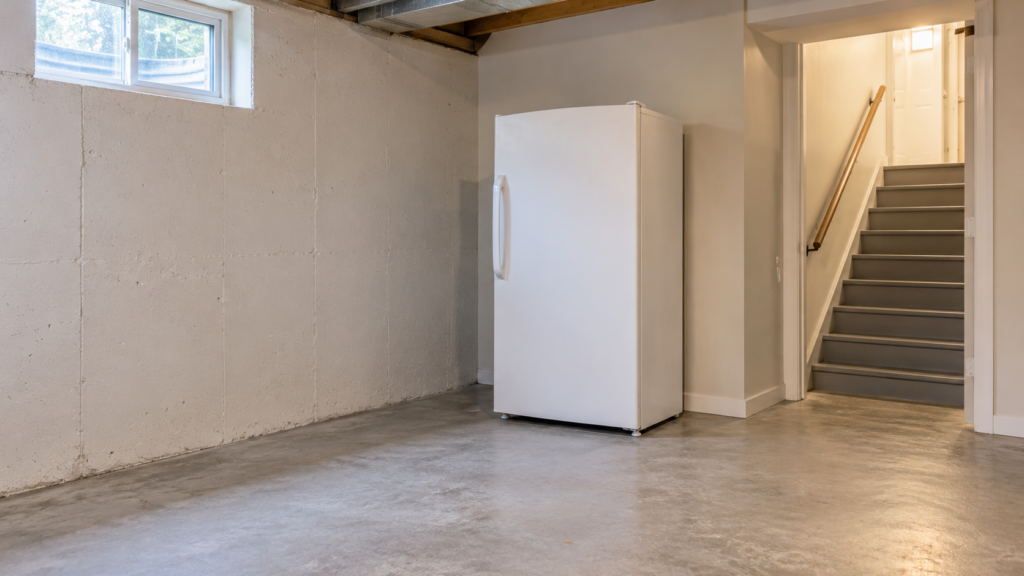
The removal plan needs to account for the path to the loading point. Record stairs, tight corners, doorway clearance, elevators, parking restrictions and the carrying distance. Mention if the unit sits behind other belongings or inside cabinetry.
A useful photo set shows the full appliance and the main access constraints. Take pictures from safe positions; do not shift a heavy unit to reveal its rear connections. Describe connection status in writing instead.
The site’s junk-removal photo guide gives further examples. Ask the responding provider how to share photos; the current general contact form has no visible upload field.
For appliances stored downstairs, the basement cleanout page can help describe a larger project. List any furniture or boxes you want removed at the same time so the provider sees the whole requested scope.
Two common replacement scenarios
A washer and dryer are being replaced
Start with the delivery terms. Confirm whether both old units will be removed, what must be disconnected and whether the laundry room’s location is included. Identify whether the dryer is gas-connected and arrange the appropriate preparation before collection.
If haul-away is unavailable, request a private quote describing both units, the connections and the access route. Avoid arranging pickup so early that you lose essential equipment before the replacement delivery is confirmed.
A freezer has been stored in the basement
Describe its size, condition, connection status and the staircase. Ask the provider to assess the actual route and confirm any preparation before moving it. Treat its cooling system as intact unless qualified handling has already been documented.
These are planning examples, not completed projects or price estimates. The order of decisions matters: confirm the route, prepare the unit appropriately and agree on the removal scope.
Review the quote before approving work
Check whether the quotation includes indoor carrying, loading, transport, accepted-item disposal and any relevant handling charges. Ask about exclusions, the way scope changes are approved and what happens if the unit cannot safely pass through the described route.
For general cost factors, consult the existing junk removal cost guide. This disposal guide does not set an appliance-removal rate or promise a free pickup.
Keep the confirmed item list and preparation requirements available for arrival day. If you later add furniture or another appliance, tell the provider before loading rather than treating the new item as part of the original agreement.
Frequently asked questions
Will the City collect my old fridge with regular garbage?
Appliances are excluded from ordinary curbside garbage. Check the official item-specific alternatives or request a private removal quote.
Where can I check appliance drop-off options in London?
Use the City’s current EnviroDepot information. Confirm the exact appliance, destination, preparation, hours and charges before making a trip.
Is retailer haul-away always included with delivery?
No assumption should be made. Ask for the removal terms attached to your order, including disconnection, location and any additional charges.
Can I donate a working appliance?
Only when a recipient accepts it. Describe the condition accurately and confirm collection or transportation before planning around donation.
Can a removal provider disconnect a gas dryer or stove?
Verify the required contractor registration and technician certification separately. Hauling availability does not establish qualification for gas work.
Should I remove refrigerant before pickup?
Do not attempt refrigerant removal yourself. Ask the collector or receiving facility what qualified handling arrangements and preparation apply.
Must I move the appliance to the driveway?
Ask whether removal from its current location is included. Do not carry a large appliance through stairs or doorways without appropriate help.
What should I include in an appliance-removal request?
Provide the item type, quantity, approximate dimensions, condition, connection status, location, access constraints and preferred timing.
Can other household junk be included in the same enquiry?
List it with the appliance and ask for acceptance of the complete scope. Additional items can change the labour, loading space and quotation.
Does a quote request book an appliance pickup?
No. The website accepts an enquiry. Confirm scope, price and the actual appointment directly with the responding independent provider.
Request an appliance-removal option that fits your property
Once you have checked reuse, retailer and drop-off possibilities, request a free, no-obligation removal quote for the help you need. Explain the appliance and access accurately, then confirm preparation, total pricing and the final arrangements with the responding provider.